Microsoft has discontinued support for Internet Explorer. To access the Sullivan website, please install a modern browser like Microsoft Edge or Google Chrome.
In a rapidly adapting real estate capital market, we are focused on advising our clients on the latest developments in alternative investment structures and opportunities in individual and programmatic real estate projects, joint ventures and private real estate funds. Given our attorneys’ reputations and networks, we are a full service resource for foreign-based investors looking to enter the U.S. market. Wherever based, our clients need pragmatic and efficient execution of their projects, as well as skilled navigation of obstacles that might otherwise get in the way of their Next.
Clients know us as innovative problem-solvers who take sophisticated real estate projects and investments from idea through exit. Our clients rely on us for counsel regarding risk and opportunity in connection with each transaction, including:
Serving as general counsel for development projects across asset classes from hospitality, to mixed use, to luxury condominiums, to state-of-the-art student housing and everything in between, is a special focus of our practice, demonstrated by our work on iconic, large-scale development projects, such as:
Owners, developers, investors, lenders, tenants and other real estate entities turn to us for advice and representation in projects of all sizes.





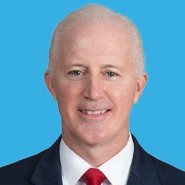



Richard Jones will speak on a panel discussion titled "Practitioner Feedback" on October 8, 2026, at the 46th Annual National Conference of State Tax Judges at the Lincoln Institute of Land Policy in Cambridge, Massachusetts. The Conference meets annually to review recent state tax decisions, consider methods of dealing with complex tax and valuation disputes, and share experiences in case management. Rich's practitioner-focused panel will explore practical strategies and best practices
Partner Geoffrey Wynne will participate in The Trade Finance Compliance Conference hosted by leading global consultancy HKA and IIBLP (the Institute of International Banking Law & Practice) in London on October 6, the theme of which is “Inside Real-World Trade Finance Compliance Decision-Making.” Geoff will join the panel discussing “Fraud, TBML (Trade-Based Money Laundering) and credit risk - one fact pattern, three silos” which will be moderated by Lorna Strong (Associate
Alexandra (Ali) Wannop, counsel in Sullivan’s Real Estate Practice Group, was featured in the New England Real Estate Journal’s “2026 Women in CRE: CREW Boston Member Spotlight.” In the feature, Ali reflects on how advice from an early mentor shaped her approach to resolving complex title issues. She emphasizes the value of looking beyond conventional interpretations and questioning assumptions to find solutions in challenging transactions. “I’ve learned that what looks like a dead
First, a crucial clarification. While The Princess Bride (the wonderful movie) has the frame narrative of a grandfather who reads the book to his grandson, The Princess Bride (the wonderful book) has the frame narrative of a man whose father read it to him, and who wants to share it with his own son. The book is out of print, and the man sends his lawyer to a used bookstore
On Friday, September 18, 2026, the Massachusetts Supreme Judicial Court (the “SJC”) affirmed the dismissal of the Town of Marshfield’s challenge to the MBTA Communities Act (the “Act” or “Section 3A”).[1] The decision confirms that covered municipalities must adopt and maintain zoning that permits multifamily housing as of right in at least one district. It also rejects Marshfield’s four principal theories for avoiding that obligation, which are explored in more
Molly Depew will co-present “Estate Tax and the Gross Estate,” a webinar hosted by the American Bar Association’s Section of Real Property, Trust and Estate Law, on October 8, alongside Preston Channing Demouchet. The first session in the ABA’s “Basics of Estate, Gift, and Generation-Skipping Transfer Tax” webinar series will review the application of the federal estate tax. Topics will include the tax rate and unified credit for residents and non-residents,
The Massachusetts Appeals Court recently issued a useful reminder that aggressive discovery positions risk negative consequences far beyond facing motions to compel. In Old Ironsides Energy LLC v. Marsh & McLennan Agency LLC[1], the court affirmed summary judgment against a plaintiff seeking approximately $20 million in damages after concluding that the plaintiff lacked admissible expert testimony necessary to prove its claimed damages. The $20 million kicker? Expert testimony would have been admissible
On September 16, 2026, the Securities and Exchange Commission (SEC) issued two proposals that, if adopted, would represent significant changes to the federal proxy rules for U.S. public companies. The first proposal would eliminate Rule 14a-8 under the Securities Exchange Act of 1934 (Exchange Act). Rule 14a-8 currently requires companies to include qualifying shareholder proposals in their proxy materials and has been part of the federal proxy rules for more than
Sullivan partners Carole Bass and Douglas Schneidman have been recognized in the 2026 edition of Doyle’s Guide among New York City’s Leading Wealth, Estates & Succession Planning Lawyers. Carole, who leads the firm’s Private Clients/Trusts & Estates practice, was named a leading lawyer, and Doug was named a recommended lawyer. Carole advises high-net-worth individuals, multigenerational families, family offices and fiduciaries on estate, wealth transfer and trust planning. She designs sophisticated, tax-efficient
Richard Jones will speak on a panel discussion titled "Practitioner Feedback" on October 8, 2026, at the 46th Annual National Conference of State Tax Judges at the Lincoln Institute of Land Policy in Cambridge, Massachusetts. The Conference meets annually to review recent state tax decisions, consider methods of dealing with complex tax and valuation disputes, and share experiences in case management. Rich's practitioner-focused panel will explore practical strategies and best practices
Partner Geoffrey Wynne will participate in The Trade Finance Compliance Conference hosted by leading global consultancy HKA and IIBLP (the Institute of International Banking Law & Practice) in London on October 6, the theme of which is “Inside Real-World Trade Finance Compliance Decision-Making.” Geoff will join the panel discussing “Fraud, TBML (Trade-Based Money Laundering) and credit risk - one fact pattern, three silos” which will be moderated by Lorna Strong (Associate
Alexandra (Ali) Wannop, counsel in Sullivan’s Real Estate Practice Group, was featured in the New England Real Estate Journal’s “2026 Women in CRE: CREW Boston Member Spotlight.” In the feature, Ali reflects on how advice from an early mentor shaped her approach to resolving complex title issues. She emphasizes the value of looking beyond conventional interpretations and questioning assumptions to find solutions in challenging transactions. “I’ve learned that what looks like a dead
First, a crucial clarification. While The Princess Bride (the wonderful movie) has the frame narrative of a grandfather who reads the book to his grandson, The Princess Bride (the wonderful book) has the frame narrative of a man whose father read it to him, and who wants to share it with his own son. The book is out of print, and the man sends his lawyer to a used bookstore
On Friday, September 18, 2026, the Massachusetts Supreme Judicial Court (the “SJC”) affirmed the dismissal of the Town of Marshfield’s challenge to the MBTA Communities Act (the “Act” or “Section 3A”).[1] The decision confirms that covered municipalities must adopt and maintain zoning that permits multifamily housing as of right in at least one district. It also rejects Marshfield’s four principal theories for avoiding that obligation, which are explored in more